
Capabilities
What Can Snap Actually Produce?
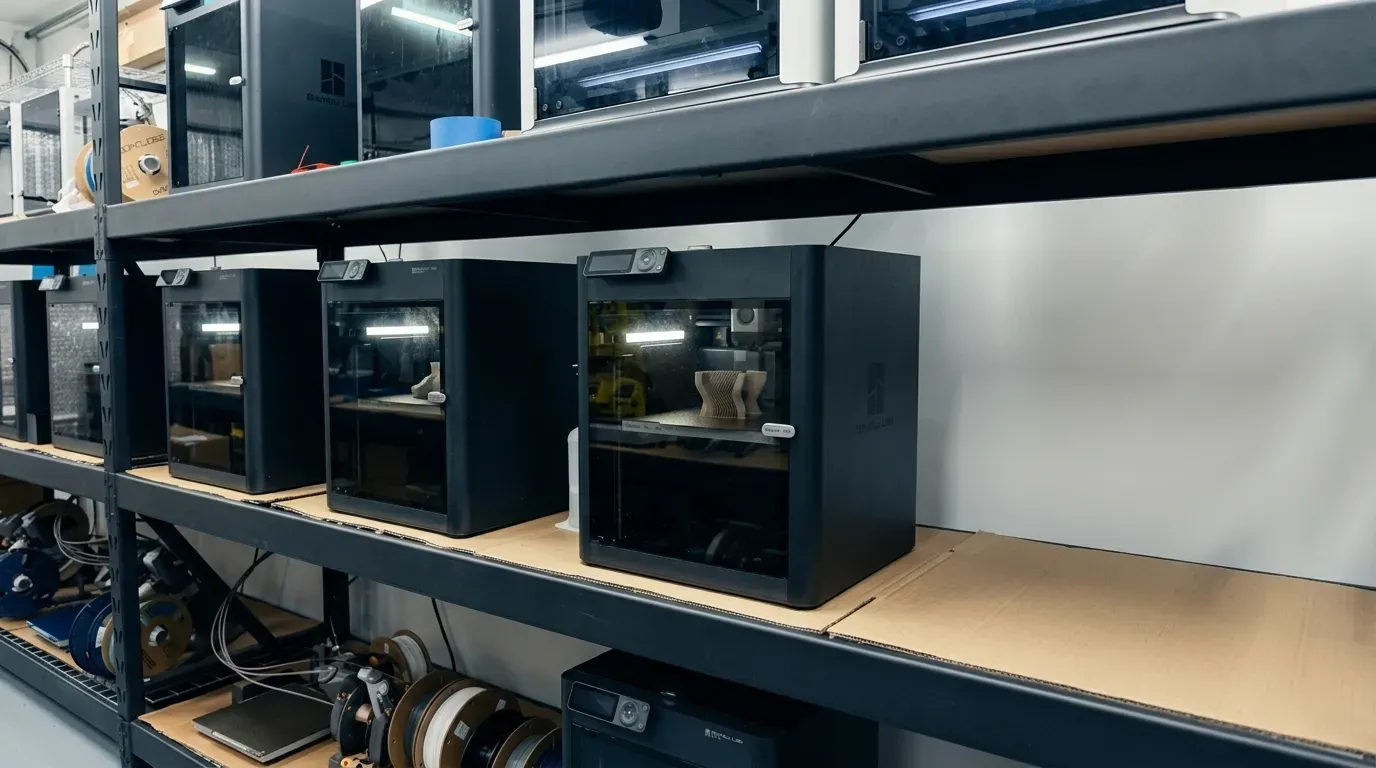
Verifiable precision, real capacity, and a print farm running 24/7, here are the numbers.
By the Numbers
Production Specifications
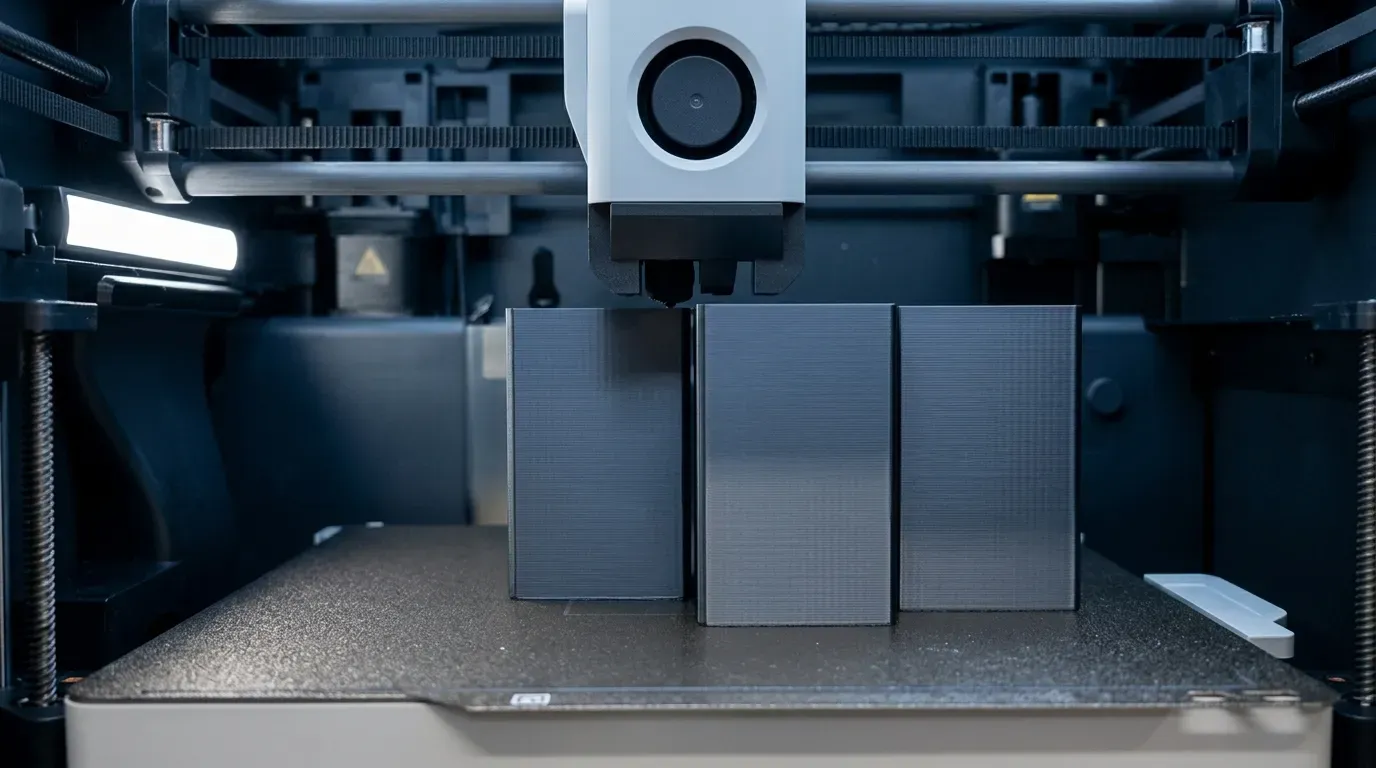
| Tolerance | ±0.127 mm (±0.005 in) |
|---|---|
| Max build volume (single part) | 350 × 350 × 400 mm |
| Larger parts | Available via post-print assembly |
| Monthly capacity | 15,000+ avg-sized units |
| Prototype lead time | 48 hours from intake |
| Print uptime | 24/7 production |
| Buffer overage included | 0.25 to 1% extra parts at no charge |
| DFM review | Included on every project |
Quality Control
How Does Snap Guarantee Precision?
01
Print Action Inspection
02
Continuous Monitoring
03
Six Sigma Standard
Materials
What Can Your Part Be Printed In?
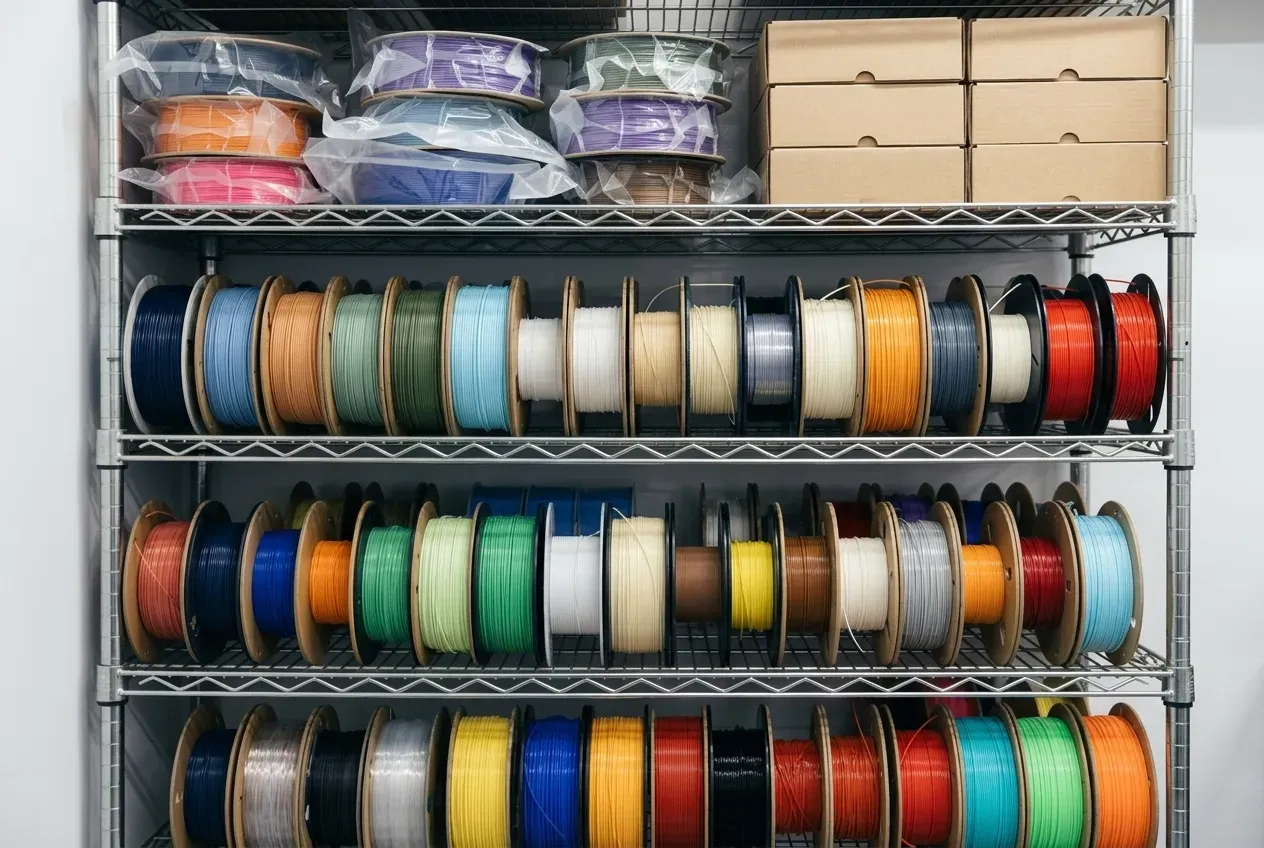
From rapid-iteration prototyping plastics through engineering-grade end-use materials, Snap stocks and prints across three performance tiers. Not sure which fits your part? DFM review picks the right one, included free on every project.
01
Prototyping
02
End-use
03
High-performance
ESD-Safe Materials
Can Snap 3D Print ESD-Safe Parts?
Yes. We print static-dissipative (ESD-safe) fixtures, trays, and enclosures in carbon-loaded ESD filaments, targeting the 10⁶ to 10⁹ Ω/sq dissipative range, with functional prototypes typically in 48 hours and no tooling cost.
Read more about ESD-safe 3D printing
ESD-safe means static-dissipative: a surface resistance high enough not to be conductive but low enough to bleed static charge to ground in a slow, controlled way, roughly 10⁴ to 10¹¹ Ω/sq, with 10⁶ to 10⁹ the ideal. ESD filaments reach that band by loading a base polymer with carbon additives.
Materials: ESD PETG is the everyday choice for trays, jigs, and housings; ESD ABS, polycarbonate, and carbon-fiber nylon add toughness and heat resistance from about 90 °C up past 157 °C; ESD PEEK covers aerospace and defense parts above 170 °C.
Typical parts: PCB assembly jigs and fixtures, SMT nests and pick-and-place end-of-arm tooling, static-dissipative component trays and kitting bins, electronics enclosures, and test or soldering fixtures.
Because printing skips the mold, a custom ESD fixture costs a fraction of a molded one and ships far sooner. Final ESD performance should be validated for your part and standard (ANSI/ESD S20.20 or IEC 61340-5-1); our free DFM review gets the material, geometry, and grounding right first.